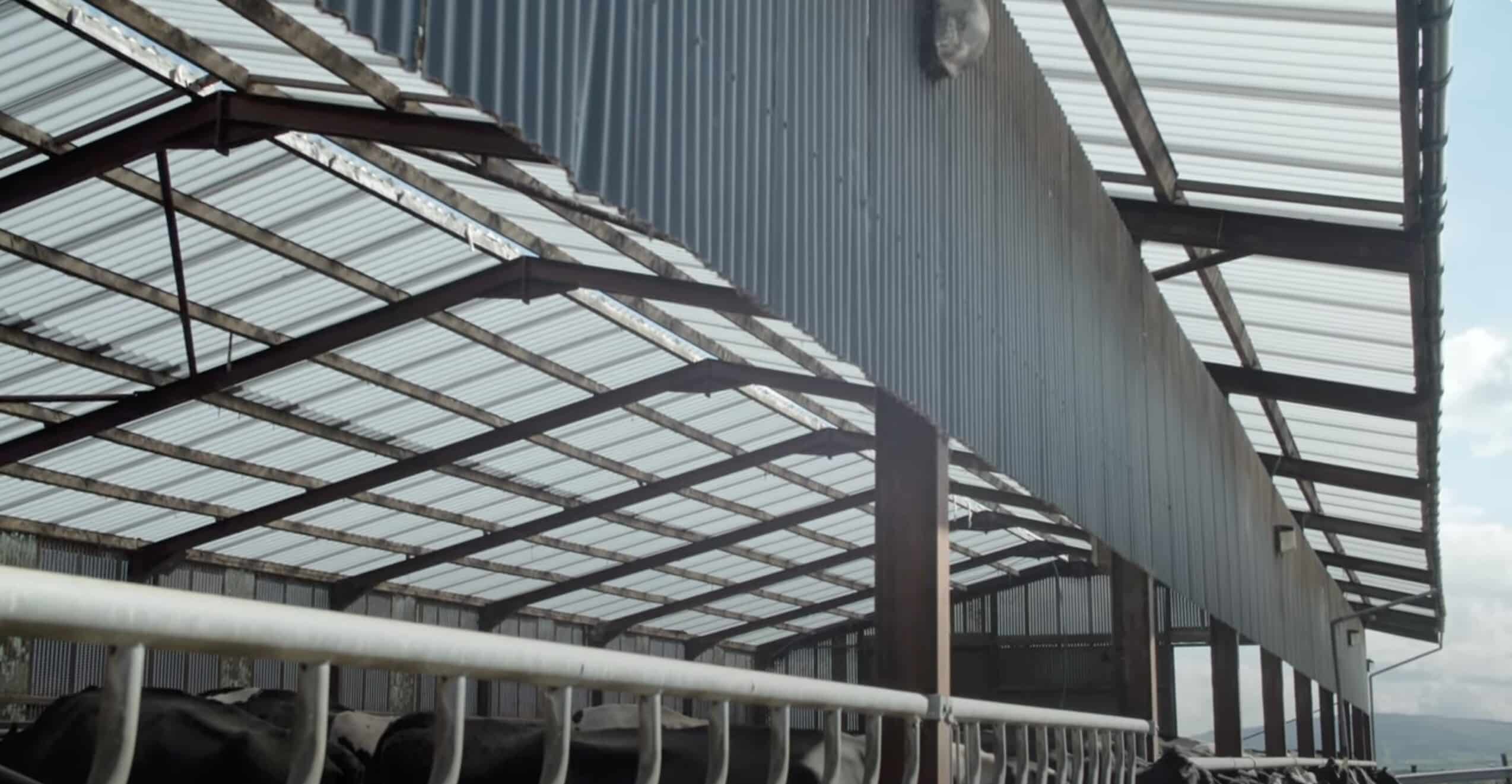
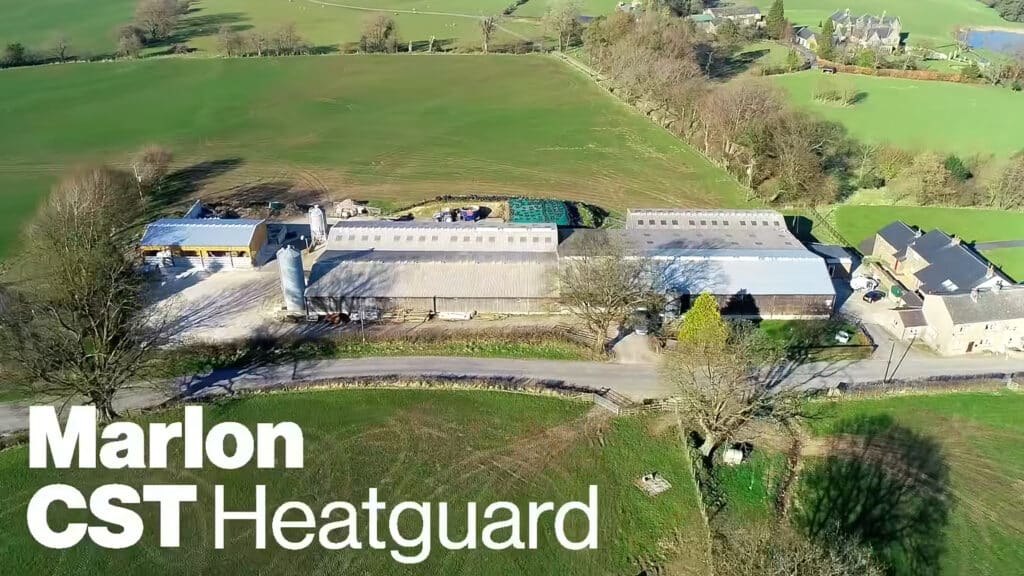
Marlon CST Heatguard withstands an exposed site at John McCollum’s dairy farm in Ballykelly, County Londonderry. The farm needed to refurbish its main cowshed roof — originally built in 2007, with an extension added in the years since. By 2018, the building was showing its age: moisture was getting into the cubicle beds, keeping them persistently wet and raising the risk of mastitis in the herd. The site itself is very exposed, and wind had already taken its toll — part of the previous roof had blown off at one point, forcing the issue.
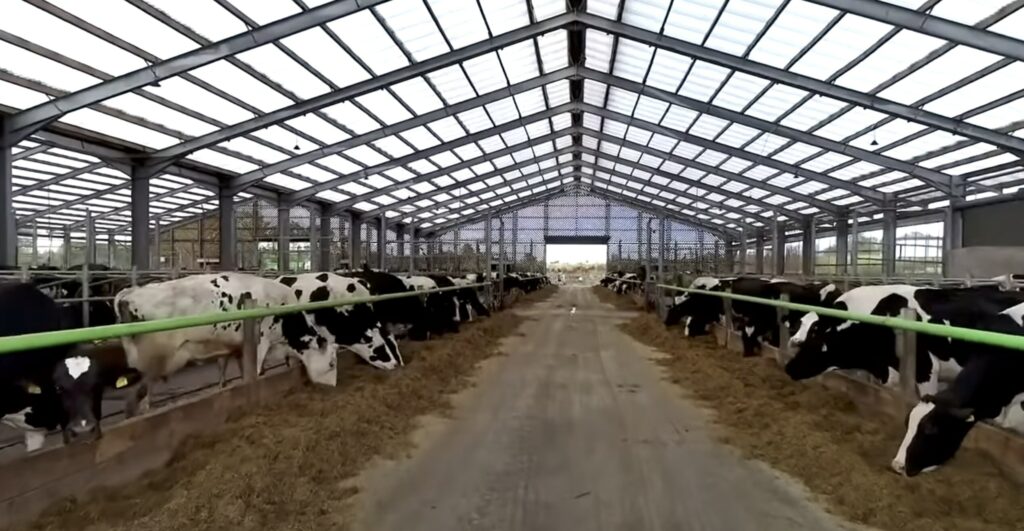
John found Marlon CST Heatguard through an advertisement from their local milk processor, then visited a nearby farm already using it before deciding. What struck him first, he says, was simply the amount of light it let into the building.
Installed in Two Days
Each Heatguard sheet covers a metre in width, so a shed 48 to 50 metres long needs roughly that many sheets to cover it. John’s own builder handled the installation, finding the sheets light and straightforward to work with, with Brett Martin on hand to advise on fixings along the way.
“The whole thing was wrapped and put on in two days.”
How Marlon CST Heatguard Withstands an Exposed Site
Given the site’s exposure and the history of wind damage to the old roof, durability mattered as much as light and heat control. Through a run of very warm days since installation, the shed has stood out for staying cool.
“It was the coolest place in the yard.”
With no issues since fitting, John says he’s looking forward to a long life out of the new roof, and the herd continues to do well. It’s one more example among Agri-Therm’s full range of case studies of Heatguard holding up under real, working farm conditions.